
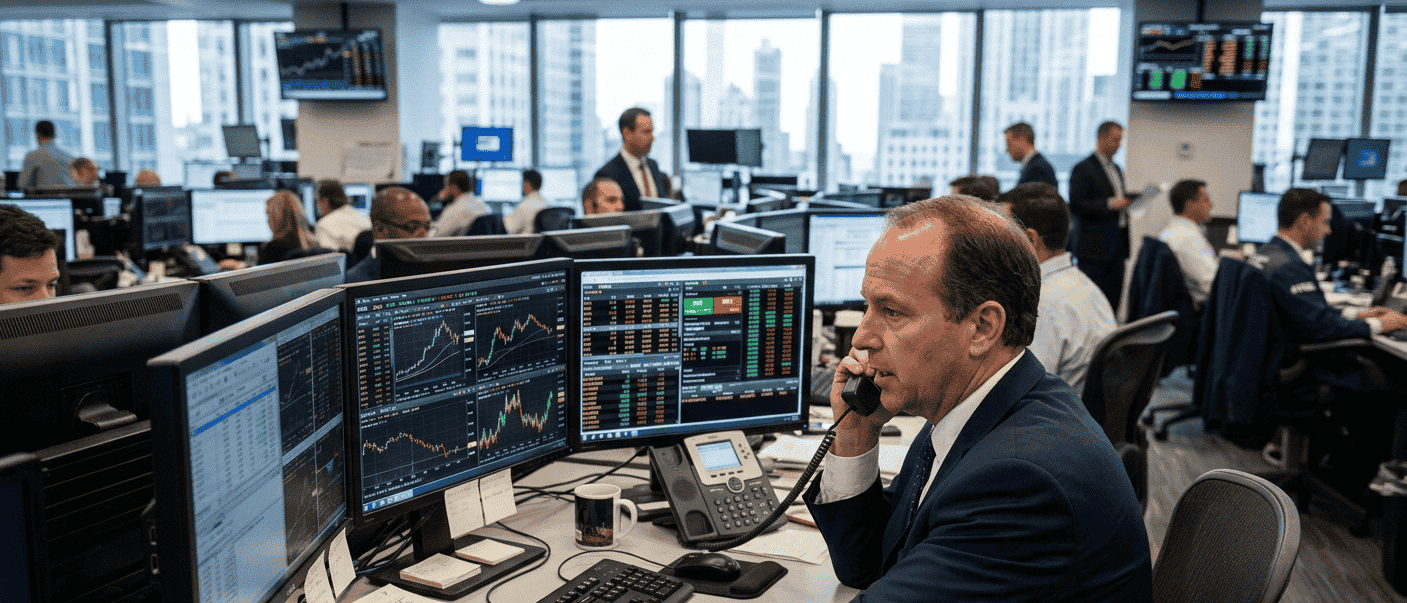
What is churning in finance? Churning is when a broker buys and sells securities in a client’s account excessively, mainly to generate commissions for themselves rather than to serve the client’s goals. It’s illegal. It violates a broker’s duty to their client under FINRA rules and federal securities law, and investors who’ve been churned can often recover their losses.
Key takeaways
- Churning means trading driven by the broker’s benefit, not yours. It doesn’t just mean “a lot of trading.”
- Courts and FINRA use three elements to prove it: the broker controlled the account, the trading was excessive for your goals, and the broker intended to defraud you or recklessly disregarded your interests.
- Two numbers help spot it: an annual turnover ratio above 6 and a cost to equity ratio above 20% are treated as red flags.
- In a 2025 to 2026 FINRA case, one broker’s excessive trading generated $158,500 in commissions while costing a customer $358,979.
- Reverse churning is the opposite problem: paying flat fees for an account nobody is managing.
The plain definition
Churning happens when a broker trades your account so often, and so much, that the trading serves the broker’s paycheck instead of your goals. Each trade can generate a commission, so a broker who churns is essentially treating your account like a fee machine.
The SEC’s own investor glossary describes it the same way: excessive buying and selling in a customer’s account, done without real regard for the customer’s investment goals, mainly to generate commissions.
This matters because active trading, by itself, isn’t illegal. A legitimate active strategy can turn over a portfolio often too. What makes churning different is the motive behind the trades and who actually benefits from them.
The legal test: three things have to be true
To prove churning in a FINRA arbitration or a court case, a claimant generally has to show three things at once.
1. Control. The broker had to be the one actually directing the trades, whether through explicit written discretion over your account or because you routinely followed their recommendations without pushing back. If you were independently making your own calls, this element is harder to prove.
2. Excessive trading. The trading has to be excessive relative to your stated goals, not against some universal standard. A retiree wanting income and safety has a very different “normal” trading level than someone with an aggressive growth account.
3. Scienter (intent). The broker has to have acted to defraud you, or with reckless disregard for your interests. Courts often infer this once the first two elements are clearly established, since a pattern of excessive, broker-controlled trading is hard to explain any other way.
The two numbers that matter most
Regulators, examiners, and expert witnesses lean on two calculations to flag likely churning.
Annual turnover ratio. Total value of securities traded in a year, divided by the average account value. A ratio above 6, meaning the entire portfolio was effectively traded over six times in a year, is widely treated as presumptively excessive, though some courts and experts use a lower threshold like 4.
Cost to equity ratio. Total commissions and trading costs as a percentage of account value. Above 20% is a commonly cited red flag: the account would need to grow more than 20% in a year just to cover trading costs before the investor sees any real return.
| Metric | Normal range | Red flag threshold |
|---|---|---|
| Annual turnover ratio | Under 2 to 4 | Above 6 |
| Cost to equity ratio | Under 10% | Above 20% |
| Average holding period | Varies by strategy | Under 30 days, repeated |
These aren’t automatic proof on their own. But they’re the numbers a securities lawyer or a FINRA examiner will calculate first.
A real example: what churning actually looked like
In a FINRA disciplinary case with a suspension running from September 2025 through March 2026, a broker was found to have recommended a series of trades to two customers, one of them a senior, that FINRA determined were excessive and not in the customers’ best interest under Regulation Best Interest. One customer routinely followed the broker’s recommendations, which supported a finding that the broker had de facto control over the account. The trading generated $158,500 in commissions for the broker. It cost the customers $358,979 in realized losses.
That gap, over $358,000 lost by the customers against under $160,000 earned by the broker, is the pattern churning cases are built around: money moving from client to broker through the mechanism of the trades themselves, not through any investment thesis paying off.
In a separate 2026 FINRA action, 14 registered representatives at one firm were found to have churned customer accounts between 2021 and 2025. Some accounts had turnover rates as high as 48 times a year. The firm’s own supervisory system had flagged only 3% of the accounts that actually showed excessive turnover.
Reverse churning: the opposite problem
Reverse churning runs the other way. It happens when a broker moves a client into a flat fee account, one that charges a management fee regardless of how much trading happens, and then does little or nothing with it. The client keeps paying the fee for a service they’re not actually getting. Regulators have pursued cases against advisers for failing to move clients out of flat fee arrangements once those clients no longer needed active management, treating the inaction itself as a violation of fiduciary duty.
The rules that actually govern this
- FINRA Rule 2111 (Suitability) requires a broker to have a reasonable basis for believing a series of recommended trades isn’t excessive, using turnover, cost to equity, and trading pattern as the core factors.
- Regulation Best Interest (Reg BI), in effect since 2020, requires broker-dealers to act in a retail customer’s best interest and to identify and address conflicts of interest that could push a broker toward excessive trading.
- Investment Advisers Act, Section 206 imposes a fiduciary duty on registered investment advisers, a generally higher bar than suitability alone.
- Securities Exchange Act Section 10(b) and Rule 10b-5 are the anti-fraud provisions often cited alongside a churning claim in federal court.
Not the same thing: two terms people mix up
Customer churn is a business metric (how many customers a company loses over a period) used across banking, fintech, and subscription businesses. It has nothing to do with broker misconduct and isn’t illegal; it’s just a retention statistic.
Insurance twisting (sometimes loosely called insurance churning) is a related but separate practice: convincing someone to replace an existing policy with a new one mainly to generate a new commission, often to the client’s disadvantage. It’s regulated differently from securities churning but follows a similar underlying logic.
Warning signs in your own account
- Trading activity or commissions you don’t remember approving or fully understanding.
- Frequent buying and selling of similar securities (in and out trading) with no clear strategy.
- Account value that isn’t growing, or is shrinking, despite constant activity.
- A broker who discourages questions about fees or pushes you to decide quickly.
- Statements showing commissions that seem high relative to your account size.
What to do if you suspect it
- Pull your full account statements for at least the past year, ideally longer.
- Calculate your own turnover and cost to equity ratios using the formulas above, or ask a securities attorney to do it.
- Check your broker on FINRA BrokerCheck, which shows registration history, disclosures, and any past complaints or disciplinary actions.
- Report it. You can file a complaint with FINRA, the SEC, or your state securities regulator. The SEC also runs a whistleblower program that can pay awards in cases resulting in significant monetary sanctions, worth researching directly on SEC.gov if you have inside knowledge of a pattern affecting multiple accounts.
- Consider FINRA arbitration. Most brokerage account agreements require disputes to go through FINRA arbitration rather than court, and investors who prove churning can recover commissions, fees, and losses.
FAQs
Yes, when the three elements (control, excessive trading, and intent or reckless disregard) are present. Simply trading often isn’t automatically churning.
There’s no single universal number, but a ratio above 6 is commonly treated as presumptively excessive, and some experts and courts use a lower threshold around 4.
Traditional churning, which relies on commissions, generally doesn’t. But the same account can suffer from reverse churning, paying fees for a service nobody is providing.
Check your turnover ratio and cost to equity ratio, review your statements for unexplained trades, and consider a free consultation with a securities attorney who can run the numbers for you.
Investors who successfully prove churning in FINRA arbitration can typically recover the commissions paid, associated fees, and losses tied to the excessive trading.
No. Customer churn is a business retention metric with no connection to broker misconduct. Churning in the securities sense is a specific, regulated form of fraud.
Bottom line
Churning is excessive trading that benefits your broker at your expense, not a vague complaint about “too much activity.” If you can see high turnover, high costs relative to your account size, and a broker who controlled the decisions, you have the outline of a real claim. Pull your statements, run the numbers, and check BrokerCheck before deciding your next step.
This is general information, not legal or financial advice. If you believe you’ve been a victim of churning, consult a securities attorney about your specific situation.